
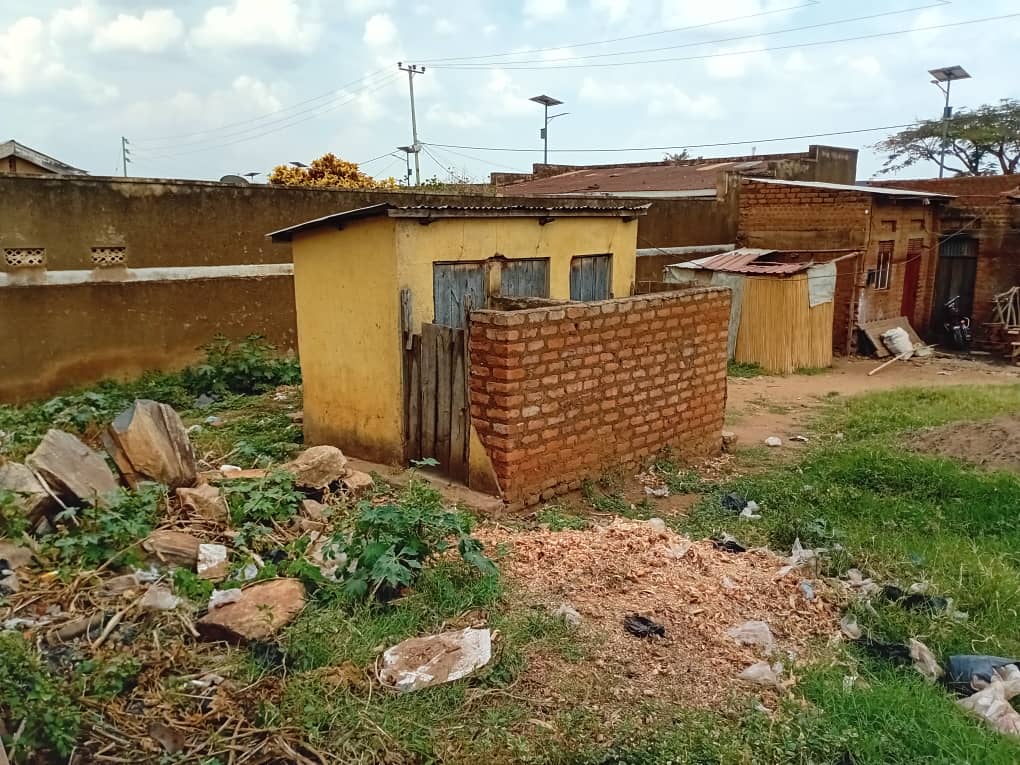
Traders operating at the Nebbi Main Market extension have raised concerns over the lack of access to clean water and functional sanitation facilities, warning that the poor conditions pose a serious public health risk.
The market extension, established two years ago on a road reserve to decongest the main market, has no piped water and relies on a single three-stance pit latrine, which traders describe as being in a poor hygienic condition.
The available latrine is closed at 6:00 p.m. each day, despite trading activities continuing late into the night. As a result, traders say they are forced to buy water at Shs500 per jerrycan during periods of scarcity, while others resort to open defecation and urination in dark spots and nearby corridors, raising fears of disease outbreaks.
John Opio Jatex, Chairperson of the Nebbi Market Vendors Association and the official responsible for collecting market dues, said the association inherited the extension without adequate water and sanitation facilities after taking over its management.
"We won the tender last month. The council handed us the place in this condition. There is a three-stance latrine, but the person managing it closes it at 6:00 p.m., yet that is when business at the market is just beginning," Jatex said.
He said closing the market was not an option because it was established to reduce congestion at the main market and provides a vital source of income for many vendors.
"We can't afford to close this market because the main idea of opening it was to decongest the main market. Some vendors have nowhere else to sell their goods, and this market is their only source of income," he said.
Jatex acknowledged that the lack of adequate sanitation facilities and access to clean water presents significant health and safety risks but said the association is engaging Nebbi Municipal Council to address the problem.
He said the immediate plan is to engage the operator of the existing latrine to extend its operating hours while discussions continue on longer-term solutions.
With the rainy season approaching, traders fear outbreaks of waterborne diseases such as cholera, typhoid and dysentery due to widespread open defecation in and around the market.
The sanitation challenges are also affecting residents living near the market extension.
Shepherd Oyirwoth, a resident whose home borders the market, said traders and customers frequently relieve themselves in his compound and nearby corridors, particularly at night.
"We wake up to human waste every morning. If there is an outbreak of cholera, our children will be the first to get sick," Oyirwoth said.
He added that the absence of functional sanitation facilities has turned nearby residential areas into makeshift toilets.
"There is nowhere for these people to go at night. We are at risk of contracting diseases if an outbreak starts," he said.
Oyirwoth appealed to the municipal council to urgently provide toilets and install security lighting to discourage people from using residential areas for open defecation and urination.
Howard Musa, the Deputy Mayor and Leader of Council Business at Nebbi Municipal Council, acknowledged the challenges facing the market extension.
"The problem is that the place is located on a road reserve, so we cannot construct permanent structures there. We are also constrained by limited funding," Musa said.
He said the council plans to mobilise resources during the second quarter of the financial year to provide temporary interventions, including water storage tanks and mobile toilet facilities.
Under Uganda's Public Health Act (Cap. 281) and the Markets Act, markets are required to provide access to safe water and adequate sanitation facilities. Health authorities classify markets operating without these essential services as a public health risk and have the legal authority to order their closure where poor sanitation threatens public health.
Health officials maintain that operating a food market without clean water and functional sanitation facilities violates public health standards regardless of its location and significantly increases the risk of infectious disease outbreaks.
